AI Engineer · LLM integration & full-stack

I turn business processes into production AI systems.

5+ years in Python and full-stack. Tech lead on B2B AI projects.

Bring me a process, a prototype or a pile of PDFs. You get a working system: LLM extraction pipelines, agents, RAG, multi-tenant SaaS. The first step is always the same: a vision document, an hour-by-hour estimate and a demo video, before anyone commits a budget.

Alex Honcharenko
Open to new projects
What I do

Three kinds of problems I solve

Most of my work starts with something that is done by hand, by a chat prototype, or not at all.

Documents into data

PDF catalogs, scans, Excel with merged cells, portals without an API. An LLM pipeline reads them as they are, keeps values verbatim, flags what a human should check, and exports clean records.

Prototype into product

A chat demo becomes a multi-tenant SaaS: user terminals, staff workstations, admin back-office, billing, audit. Delivered in increments, in production, with real users on it.

Routine into automation

Telegram bots, Google Sheets backends, browser agents that walk a portal like a person. Small systems that remove hours of manual work every week for a small business.

Selected work

Projects

Client names are omitted; the numbers are real. Two of the projects have a short walkthrough video.

Walkthrough: consultation → clinician decision → billing record (1:21)
Healthcare · SaaS

Clinical consultation SaaS: from chat prototype to production

A healthcare services provider had a single-tenant chat prototype for guided consultations: no clinician workstation, no billing records.

I designed and built a multi-tenant platform: a patient terminal (intake, safety questions, photos), a clinician workstation (queue, case page, approve/override) and an admin back-office (tenants, fees, invoices, audit).

Result: in production, several clinical pathways, clinics billing from the same record.
Python / FastAPIStructured LLM extractionMySQLReact
Walkthrough: messy catalog → clean SKUs (1:25)
E-commerce · Data pipeline

Vendor onboarding: PDF & Excel catalogs → validated SKUs

A furniture marketplace onboarded a vendor a week, ~1,000 SKUs each, as PDF lookbooks, scans and Excel price lists with photos in merged cells. An operator spent 2–4 days per vendor retyping.

I built a Python pipeline that reads the files as they are: one LLM call per file for the layout, geometry for photo-to-product links, verbatim values, structural flags, a review screen, export as drafts.

Result: 1,589 products from a 111-sheet workbook in ~18 s, <1% lost (all logged), ~3% flagged for a human. 8 real vendor files proven end to end.
PythonLLM layout detectionPDF & scan parsingReview UI
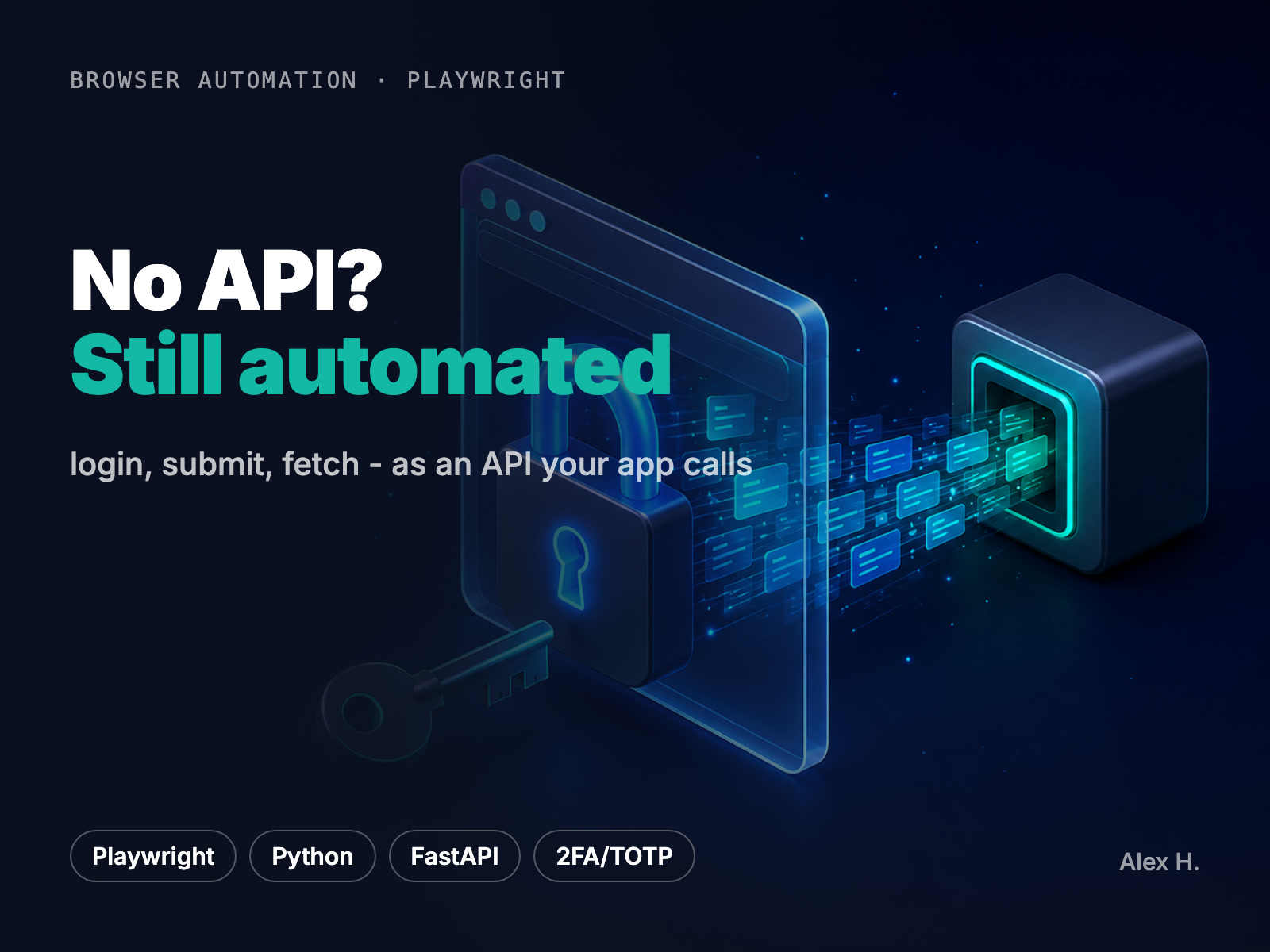
Browser agent for portals without an API
Conceptual demo: the agent walks the portal like a person, the LLM only maps the request to steps
Legal · Automation

Browser agent for portals without an API

Law firms request medical records through portals that have no API. Staff log in, search, click through forms and download files by hand, dozens of times a day.

I scoped and demoed an agent that runs the portal in a real browser: a scripted scenario does the clicking, the LLM maps each request to the scenario's options, every step is logged and visible in a watch console.

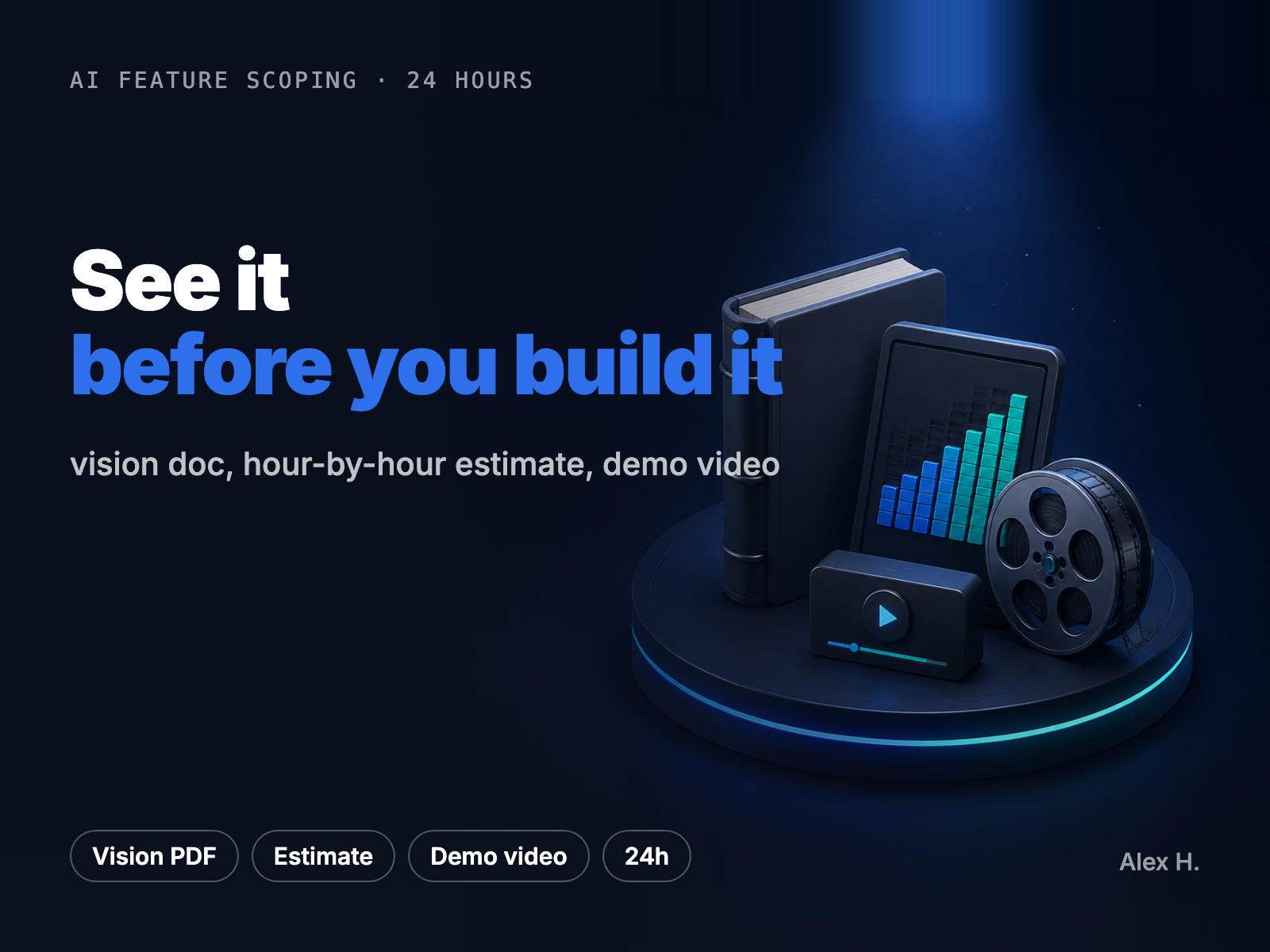
Deliverable: vision document, hour-by-hour estimate and a short demo video for the client's decision.
PlaywrightLLM request mappingPythonAudit log
AI search over a product catalog
Hybrid search: catalog filters when the query is exact, vector search when it is descriptive
E-commerce · Search

AI search and chat over a marketplace catalog

Shoppers ask in plain language: “a grey sofa under 800 for a small living room”. Classic filters miss it, pure vector search returns noise.

I built a hybrid router that decides per query between structured filters and semantic search, added image search, made chat answers deterministic, and wrote the tooling that keeps the vector index in sync with the catalog.

Result: deployed on AWS ECS; the same question gives the same answer, price bands respected, colors and attributes searchable.
Vector searchRerankingImage searchAWS ECS
WayHome bot Question 7 of 25Which neighbourhoods? Nueva Córdoba, Güemes Question 8 of 25Budget per month (USD)? 600 – 800 Question 9 of 25Move-in date? Type your answer… Lead card · #0412 ClientM. Fernández TypeRent · 2 rooms AreasNueva Córdoba, Güemes BudgetUSD 600 – 800 / month → team group → .xlsx template Google Sheet · Leads #ClientAreasBudget 0410L. RíosCentro450 0411P. AguirreAlta Cba700 0412M. FernándezN. Córdoba600–800 Row written by the bot · manager panel reads the same sheet Illustration of the flow · client data replaced
Direct client: a real-estate service in Córdoba, Argentina
Small business · Telegram

Telegram bot + Google Sheets backend for a real-estate service

A real-estate consultant sold service packages by voice and kept everything in spreadsheets. Every client meant retyping the same questionnaire and building the same documents by hand.

I built a Telegram bot that walks the client through a 25-question intake, turns answers into a lead card and the consultant's own Excel templates, posts them to the team group, and a small web panel for managers. Runs on a VPS, webhook behind Caddy.

Result: in production on the consultant's live spreadsheets; two solutions sold and delivered, the second one on the strength of the first.
PythonTelegram APIGoogle SheetsFastAPIReact panel
How we start

See it before you build it

Before anyone commits a budget, you get three things. They are useful even if we never work together.

  1. A call, or your process on screenShow me how it is done today: the spreadsheet, the portal, the PDFs, the chat. Thirty minutes is enough.
  2. Vision documentWhat the system does, screen by screen, in your terms. Scope, what is out, what the risks are.
  3. Hour-by-hour estimateEvery feature with hours, so you can cut, reorder or split it into phases yourself.
  4. Demo videoA short walkthrough of the future system on your data, so the whole team sees the same thing.
Vision doc, hour-by-hour estimate, demo video in 24 hours
Stack

What I build with

Chosen for boring reliability, not novelty. I pick the simplest thing that survives production.

AI / LLMOpenAI, Anthropic Claude, LangChain, RAG, structured extraction, agents, MCP, evaluation and tracing (Langfuse)
BackendPython (FastAPI, Django), Node.js, REST APIs, async processing, Celery, Redis
DataPostgreSQL, MySQL, pgvector, Milvus, Pinecone, data pipelines, PDF and scan parsing
FrontendReact, TypeScript, Next.js
Cloud & deliveryAWS (ECS, ECR, S3), Docker, CI/CD (GitHub Actions, GitLab), Caddy, Playwright
PracticeSystem and API design, multi-tenant SaaS, written specs with acceptance criteria, code review, incremental releases
Contact

Tell me what is done by hand today

Telegram is the fastest. I reply the same day, usually within a couple of hours.